Field notes
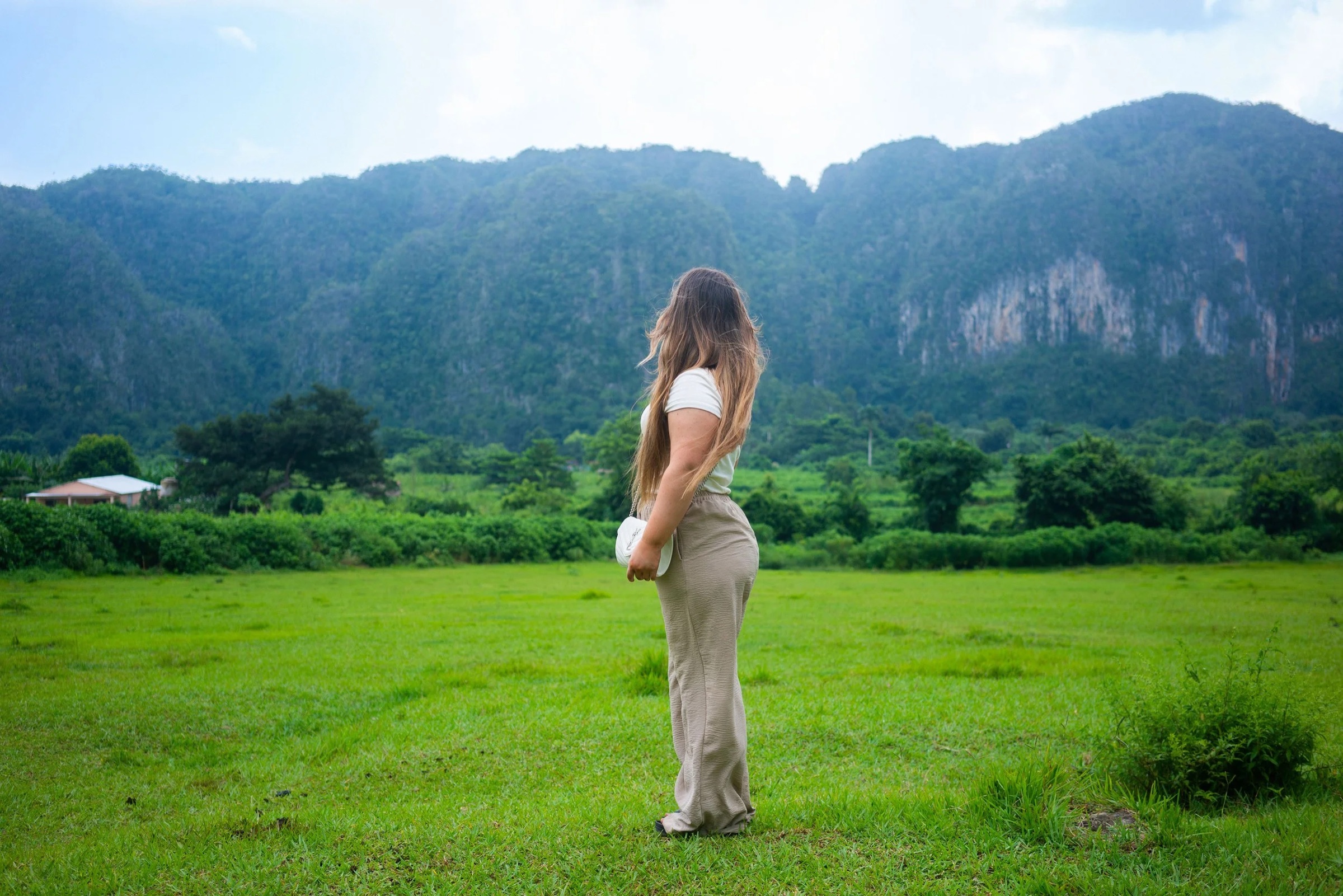
Viñales, where the world's best cigars begin
Jurassic mountains, red earth, thatched drying barns, and the tobacco every cigar maker on earth envies. A love letter to the valley we drive to before dawn.
Read on →Two families, two worlds, one field an hour outside the city.
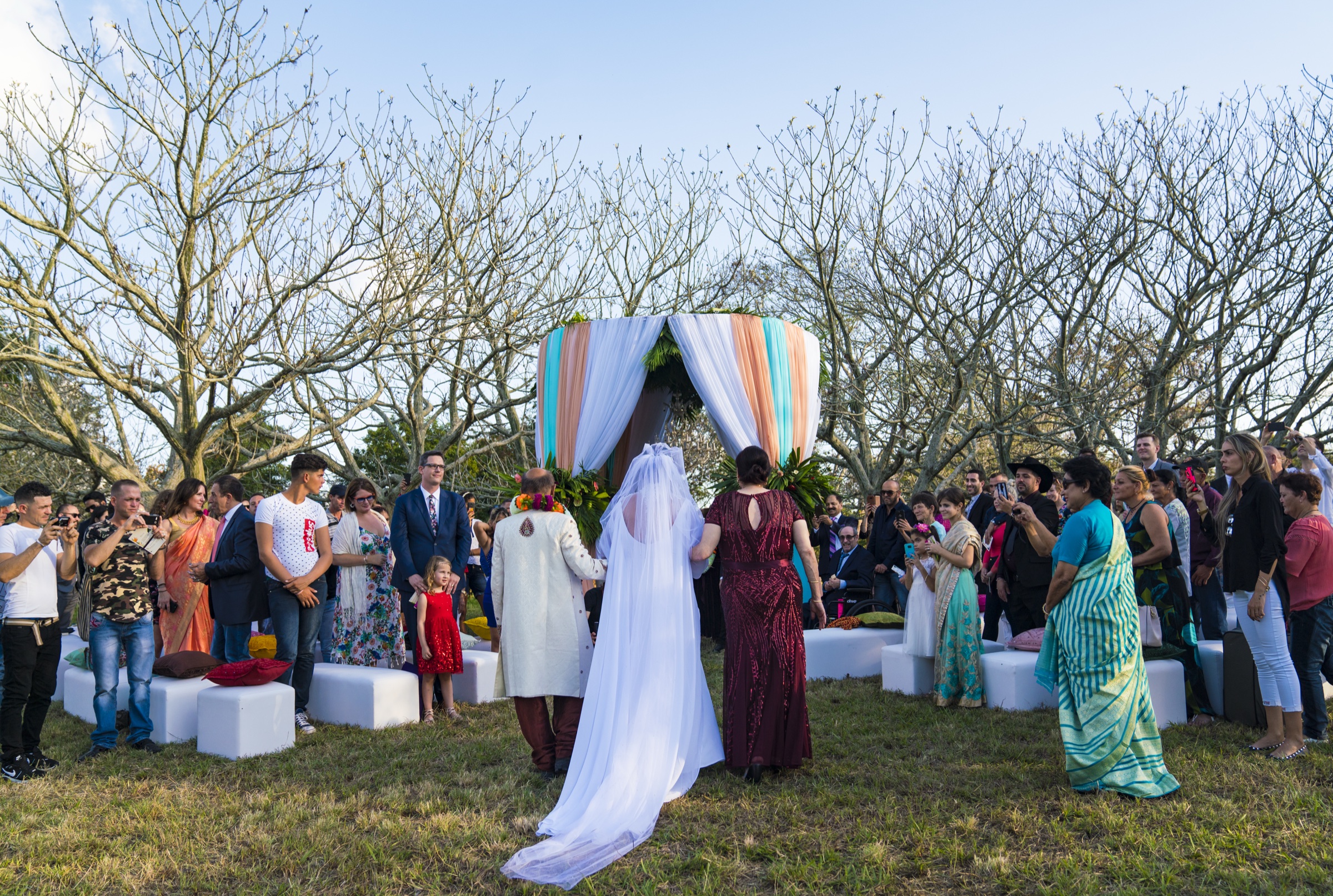
He grew up riding horses outside Havana. Her family came from India by way of New York. The wedding had garlands, a mandap strung between the trees, a sitar in a colonial courtyard — and a horse.
The groom grew up an hour outside Havana, in the kind of countryside where boys learn to ride before they learn to ask permission. The bride's family began in India and settled in New York. The two of them met the way people meet now — somewhere in the middle — and when it was time to marry, the middle turned out to be a field in the Havana countryside on a bright, windy winter afternoon, which in Cuba means sun, tall grass, and twenty-eight degrees.
We've photographed a lot of weddings. We had never photographed anything like this one.
Not as a spectacle — as the most natural thing in the world. In the Cuban campo, a man shows up to the important moments of his life on a horse, and the groom wasn't about to make an exception for the most important one. Black suit, wide country hat, a dark horse moving easy through the grass — and behind him the guests following on foot, like a procession that had been arriving at weddings this way for a hundred years.
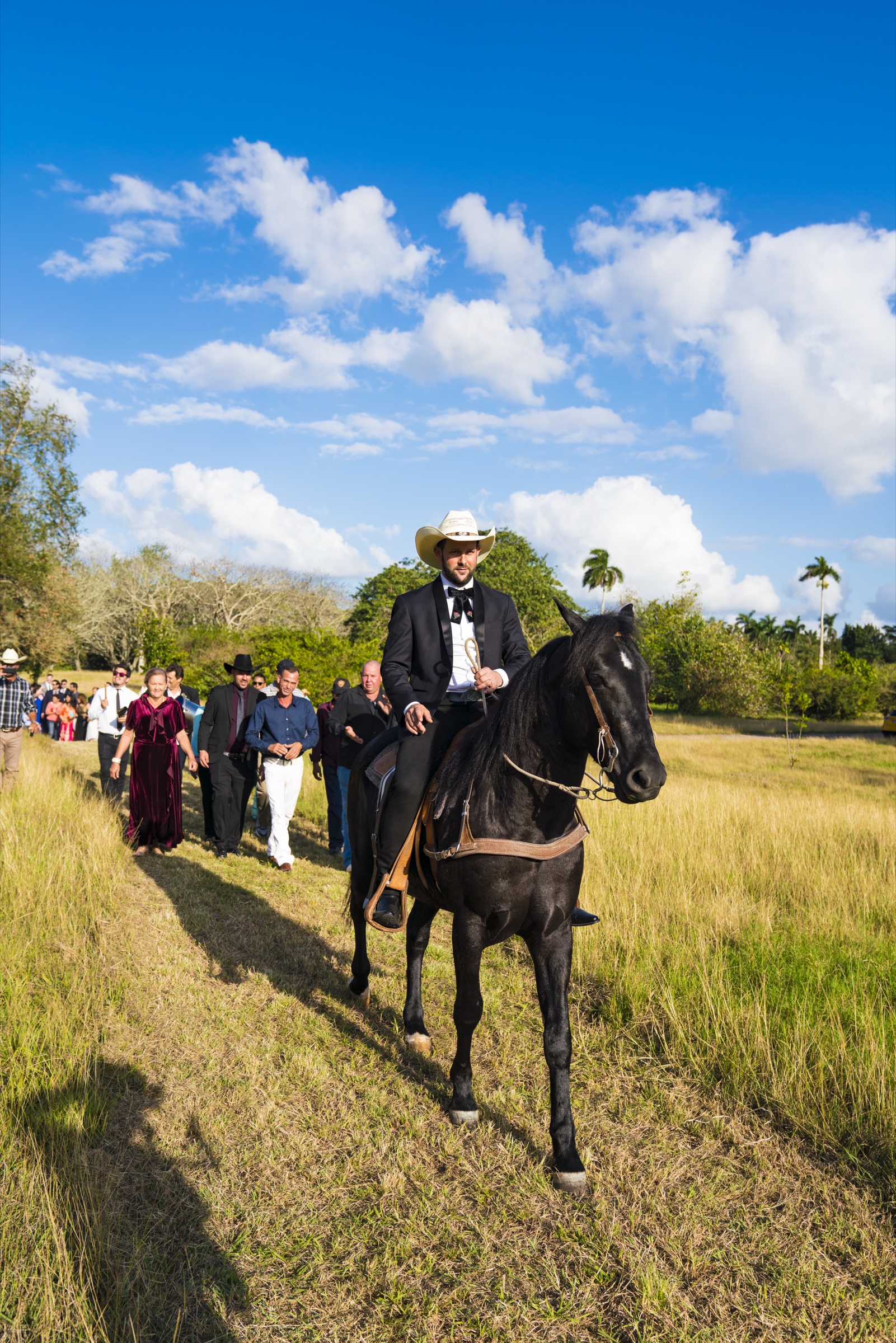
The ceremony space was strung between the trees: a canopy of draped fabric — coral, white, turquoise — that every Indian guest recognized at once as a mandap, and every Cuban guest simply called beautiful. White seats in the grass. A chandelier hanging from the frame, waiting for the evening. Royal palms on the horizon, as if they'd been planted for the occasion.
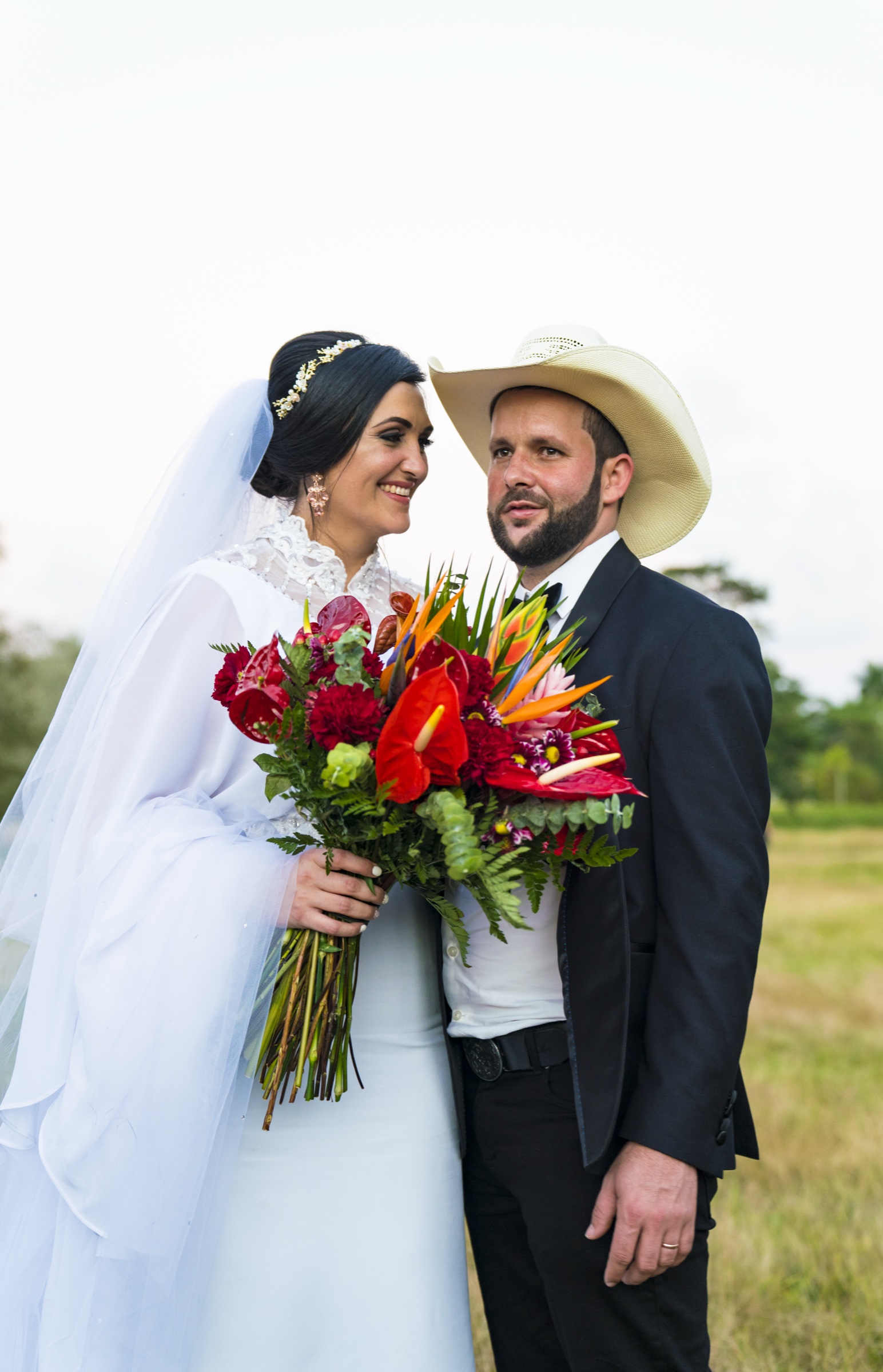
He wore an embroidered sherwani. She wore white, with a veil the wind kept trying to borrow. Her bouquet wasn't imported roses — it was Cuban flowers, heliconias and gingers, the reds and oranges the island grows on its own. The two of them came across the field slowly, no aisle runner, no string quartet, just grass and wind and a couple hundred people turning around at once.
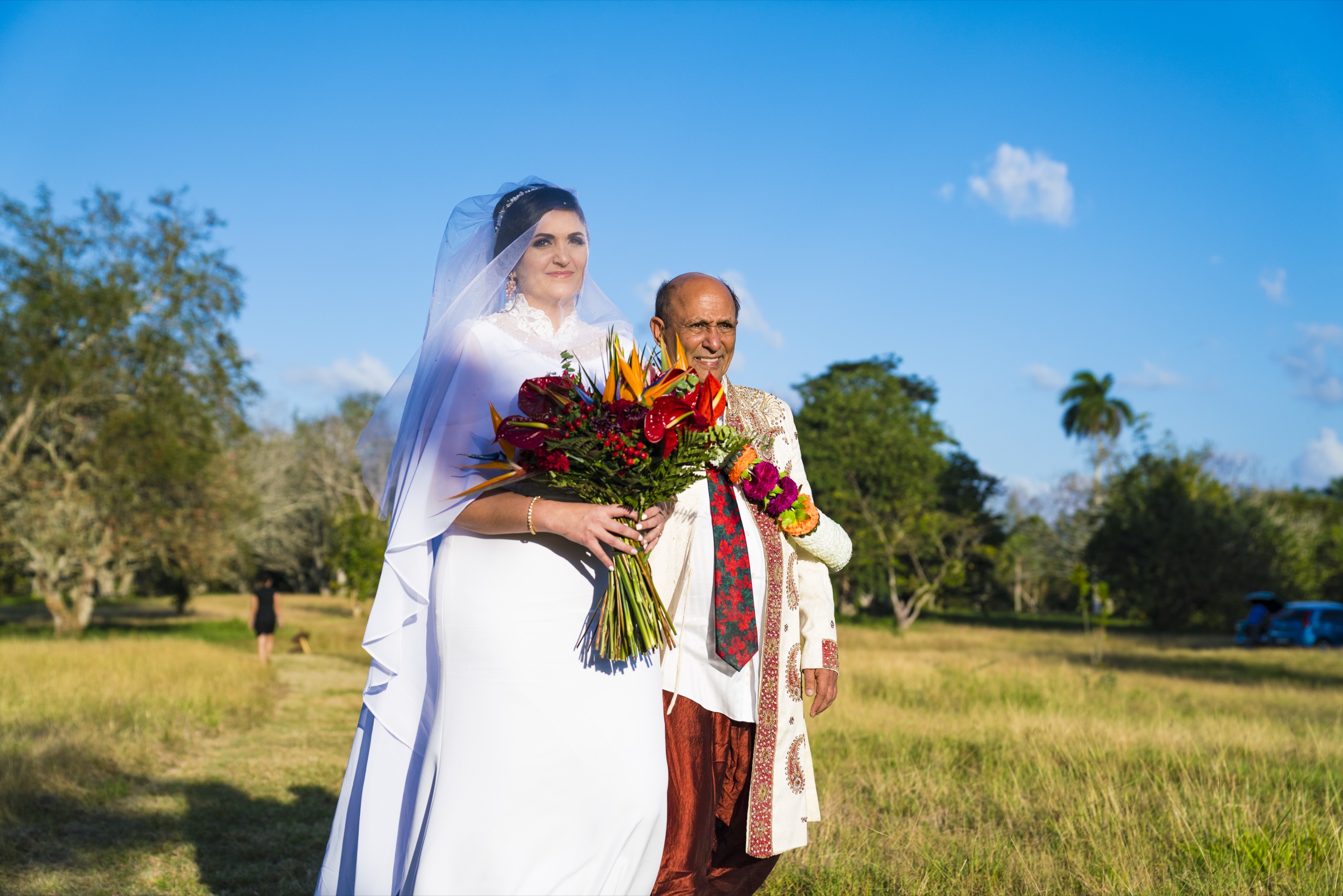
There were garlands — the jaimala, the exchange of flowers that in an Indian wedding means we choose each other — and by the end of the afternoon the garlands had migrated, the way good customs do, from the couple to everyone else. At one point the two fathers stood in the middle of the field wearing flowers to their chins, holding on to each other and laughing — one in Spanish, one in English, neither needing a word of the other's language.
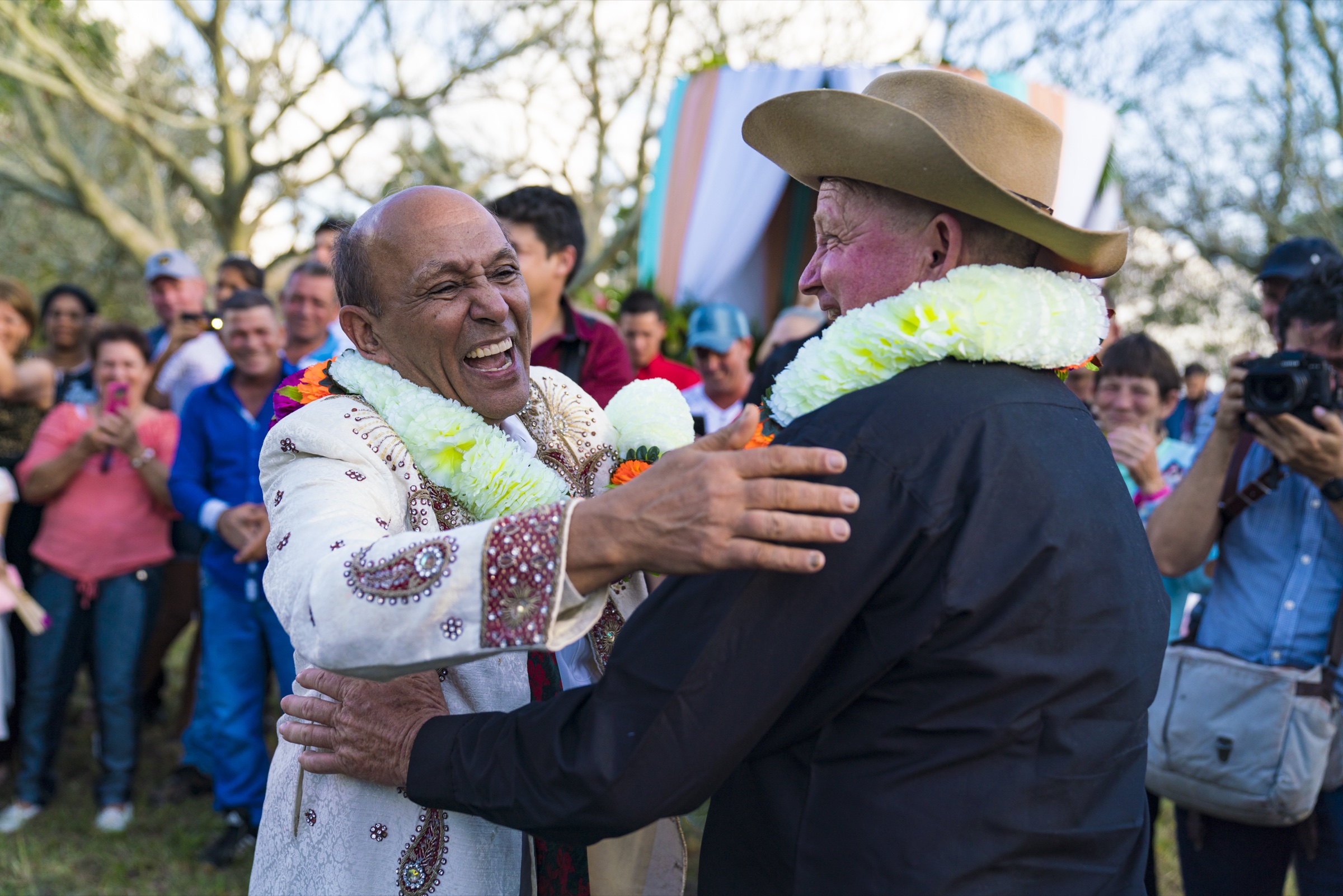
“The vows were in two languages. The tears didn't need either.”
Between the ceremony and the city we stole the couple away for twenty minutes — that's all a wedding ever really gives you, and it's enough. Veil and country hat. Lace and heliconias. A field that an hour earlier had held two hundred people and now held two.
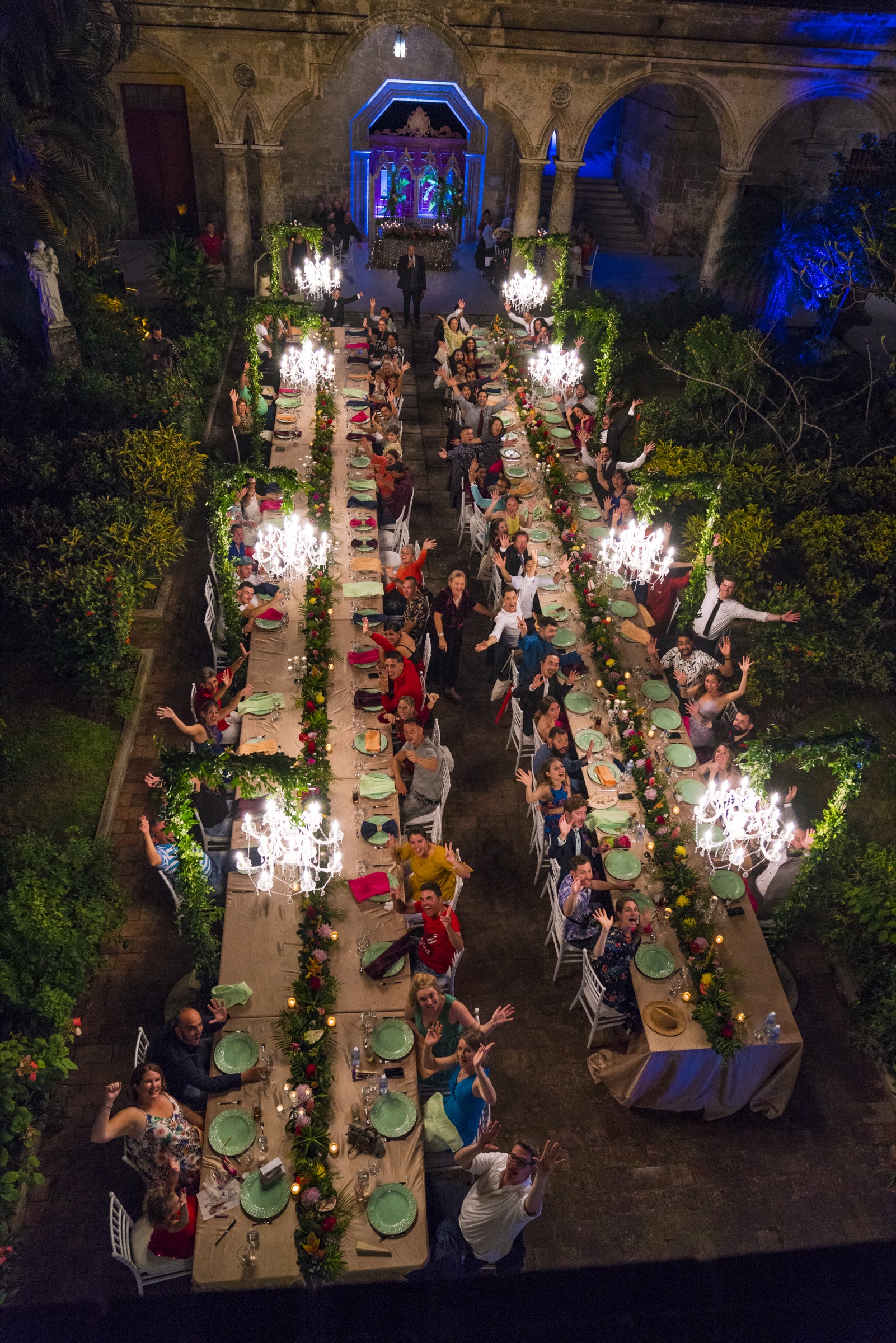
That night, Havana did what Havana does. The families came together in a colonial courtyard in Old Havana — stone arches, chandeliers hung in the greenery, two long tables running the length of the patio without a single empty chair. A sitar player in a silk kurta tuned up under a Cuban arcade. Somewhere between the third course and the first toast, the courtyard stopped being two families and became one loud one.
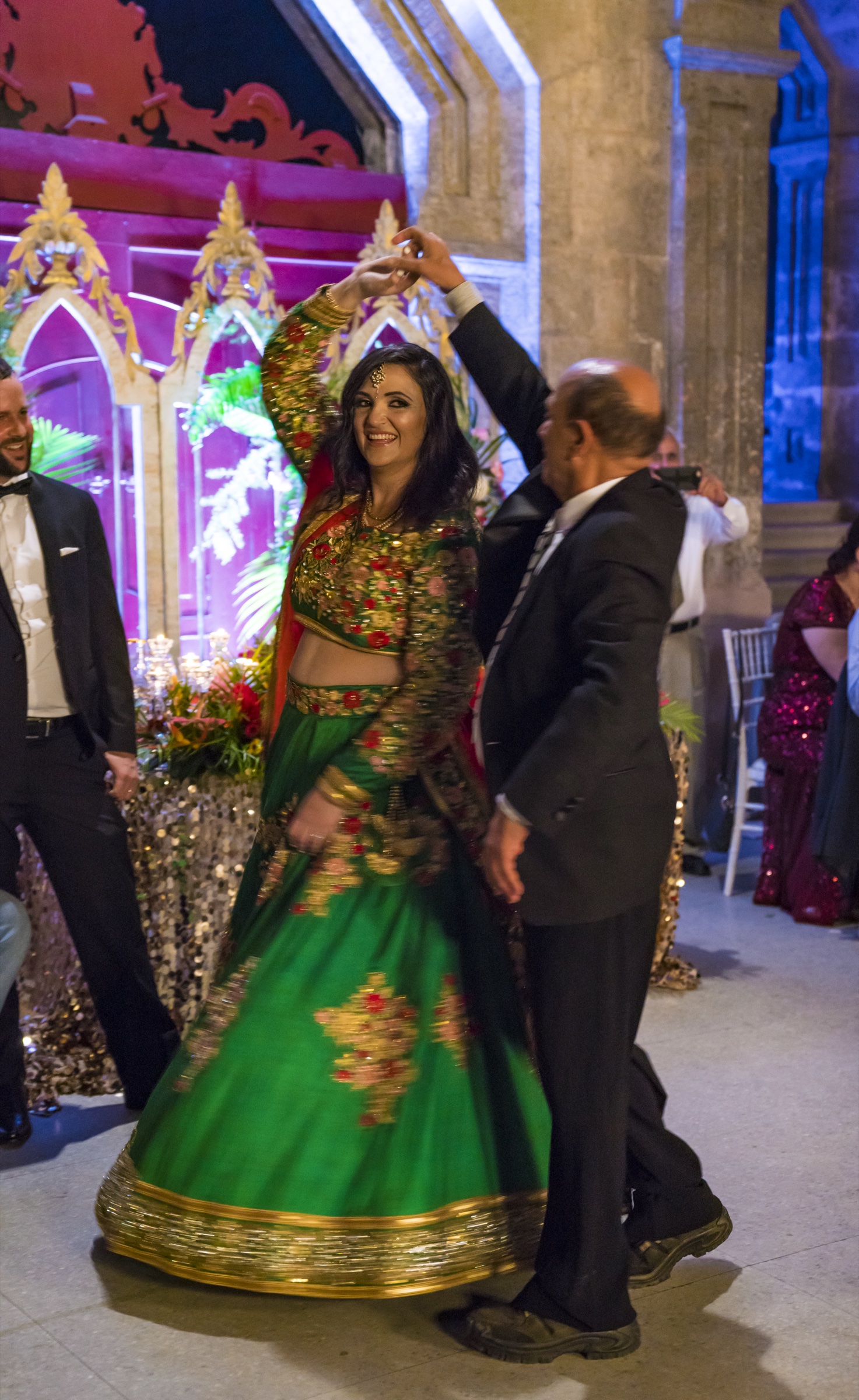
The bride changed into a green-and-gold lehenga and danced with her father while the whole patio clapped the rhythm. By midnight the dance floor was operating fluently in Hindi, Spanish, English, and rum.
That traditions travel better than anyone expects — a mandap looks like it was always meant to have royal palms behind it. That every wedding, in every language, runs on the same three fuels: family, food, and somebody's grandmother having the night of her life. And that the photographs matter more than usual when the families live an ocean apart — because the album becomes the one place where everyone is always together.
Tropical Vows is our wedding coverage — built around your ceremony, your families, and the way you want to remember the day. Havana countryside, colonial courtyard, or both.
See Tropical Vows →Jurassic mountains, red earth, thatched drying barns, and the tobacco every cigar maker on earth envies. A love letter to the valley we drive to before dawn.
Read on →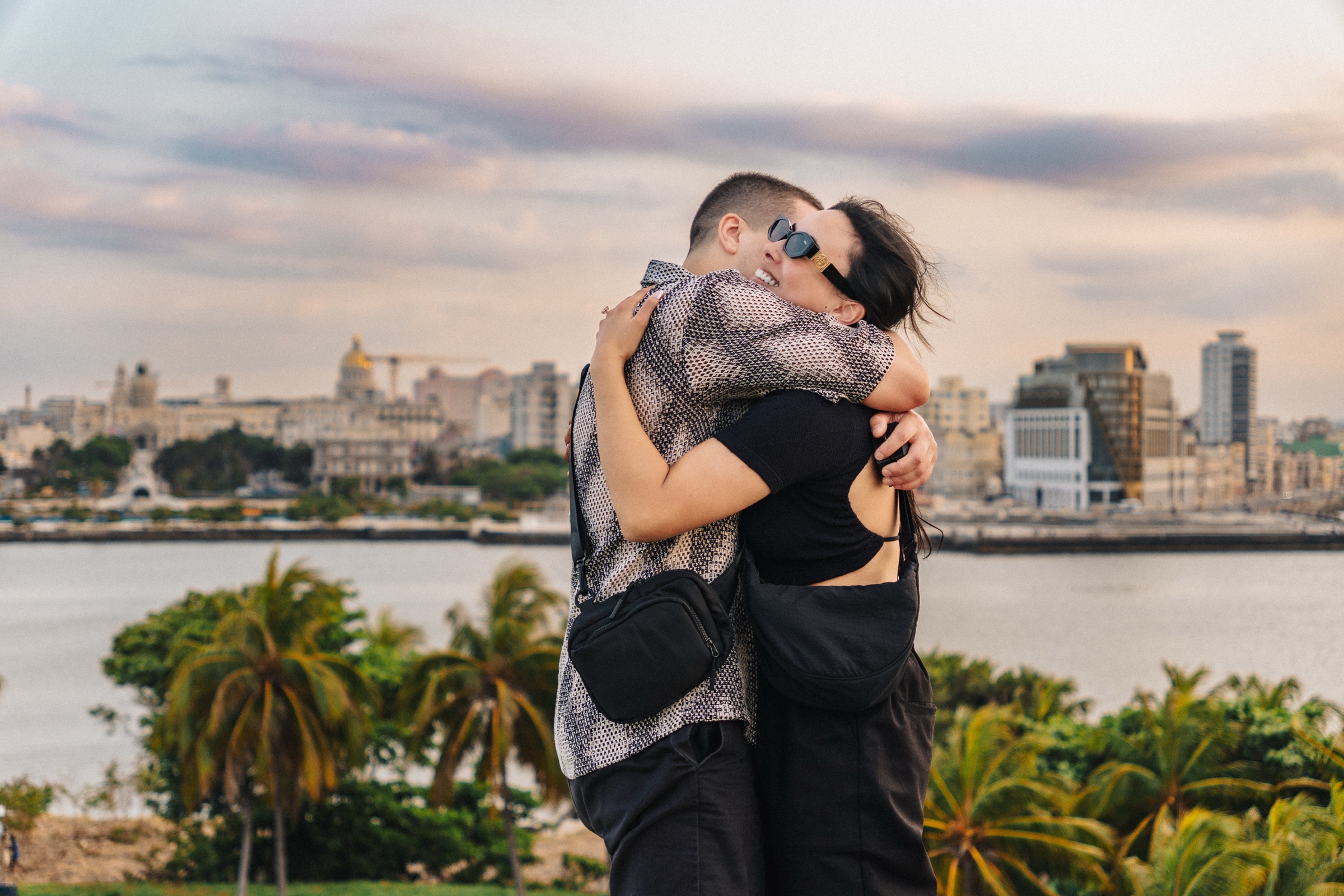
It starts weeks earlier, in an email thread she'll never see. It ends on a rooftop with champagne. In between: one question, on one knee, in the most photogenic city in the world.
Read on →
An open letter to anyone coming to Cuba wanting to see what the guidebooks don't show — the hidden courtyards, the neighborhood markets, the five-o'clock light.
Read on →Reading is good. Walking is better. Book a session and let one of us walk you through the city.