Field notes
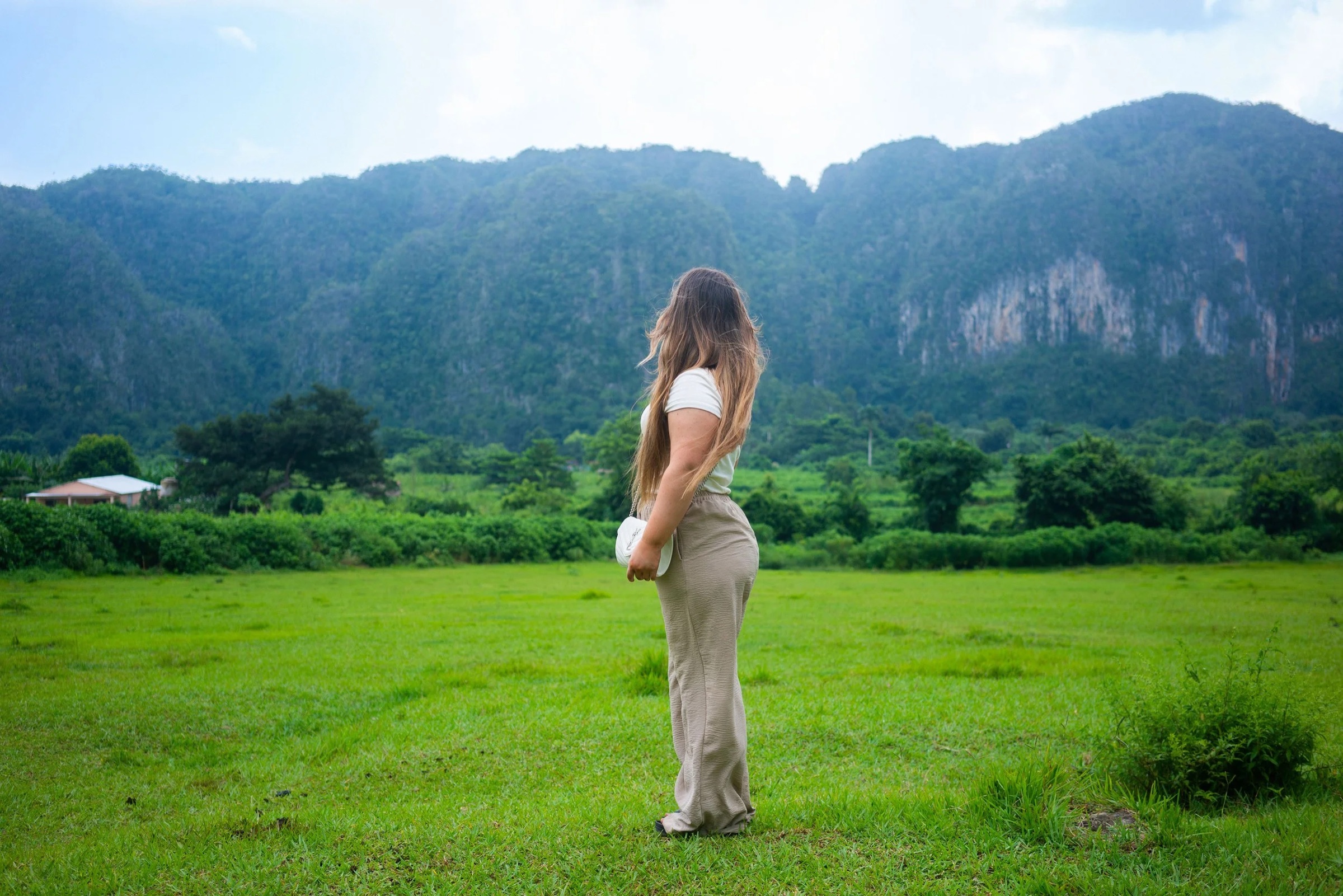
Viñales, where the world's best cigars begin
Jurassic mountains, red earth, thatched drying barns, and the tobacco every cigar maker on earth envies. A love letter to the valley we drive to before dawn.
Read on →Discover the real Havana with Cuban Soul in Pictures.

An open letter to anyone coming to Cuba wanting to see what the guidebooks don't show — the hidden courtyards, the neighborhood markets, the five-o'clock light.
You don't visit Cuba: you walk it. You listen to it. You learn to wait for the coffee, to greet the neighbor, to watch the light shift across a blue wall. Itineraries don't describe it: the shortcuts, the detours, the friends of a friend do.
Showing a traveler around as a local means teaching them the rhythm. Where to sit, where to pause, which street to take at five in the afternoon and which to avoid at noon. The camera comes after: first the time shared, then the picture.
That's why our sessions start with a coffee, not a pose. And why they almost always end with a drink on a rooftop with someone who, two hours earlier, was a stranger.
A photographer who comes from elsewhere photographs what they see. One who lives here photographs what they know is about to happen. The difference is in the small details: the exact second before the Chevy's owner opens the door, the balcony's shadow at four-thirty, the greeting that opens a conversation and the conversation that opens a story.
Knowing the people of the neighborhood means the doors open. The barber waves you in. The woman on the second floor comes down to say hello. The musicians in the alley play you two extra songs. None of that shows up in a guidebook. All of it shows up in the photos.
“First the time shared, then the picture.”
Every session is different because every traveler is, but there's a backbone. We start by walking. We stop for something to drink. We run into two or three friends along the way. We cross neighborhoods — Habana Vieja, Centro, sometimes Vedado — and end somewhere with a view and music.
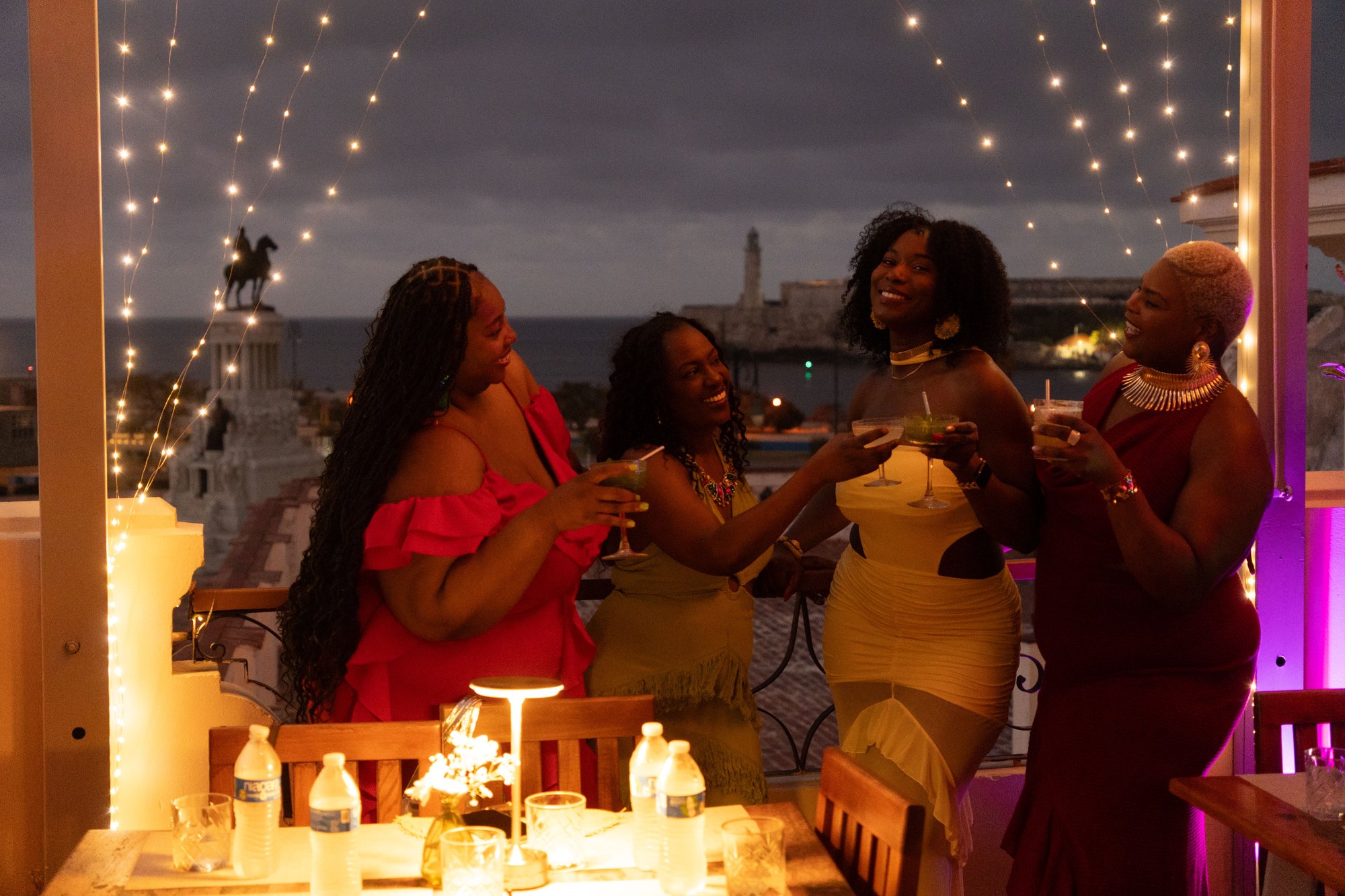
Where we walk depends on the day, the light, and you:
Book the session for your first full day, not your last. It doubles as a guided orientation: two hours in, you know which streets you'll want to come back to, where the light lives at five in the afternoon, and how the whole classic-car thing actually works. The rest of your trip inherits everything the session taught you. And if it pours (it happens), a real downpour just moves us under an arcade or to the next morning, at no extra cost.
If you want to scout ahead, our free Havana Instagram Guide maps the most photogenic places in the city, in the order we would walk them with you.
This is the part we are proudest of. Book with a local studio and everything you spend stays with the people who make the day happen — the photographers, the drivers who keep those convertibles alive against all odds, the bartender with your mojito ready before you sit down. Travel to Cuba works best when it works like this: person to person.
Forty to sixty edited photos reach you in about three days, through a digital gallery. Some posed, most not. The ones you'll remember are almost always the ones you didn't realize we were taking — the one that comes out when someone made you laugh, or when you were looking the other way and the light turned perfect.
Cuba isn't forgotten. But the photos help. And photos made by someone who also lives here help more.
Our Cuban Swing is two hours on foot and in a classic car through the neighborhoods we know best — starting with a coffee, ending on a rooftop with someone who two hours ago was a stranger. The session this post is about.
See the Cuban Swing →Jurassic mountains, red earth, thatched drying barns, and the tobacco every cigar maker on earth envies. A love letter to the valley we drive to before dawn.
Read on →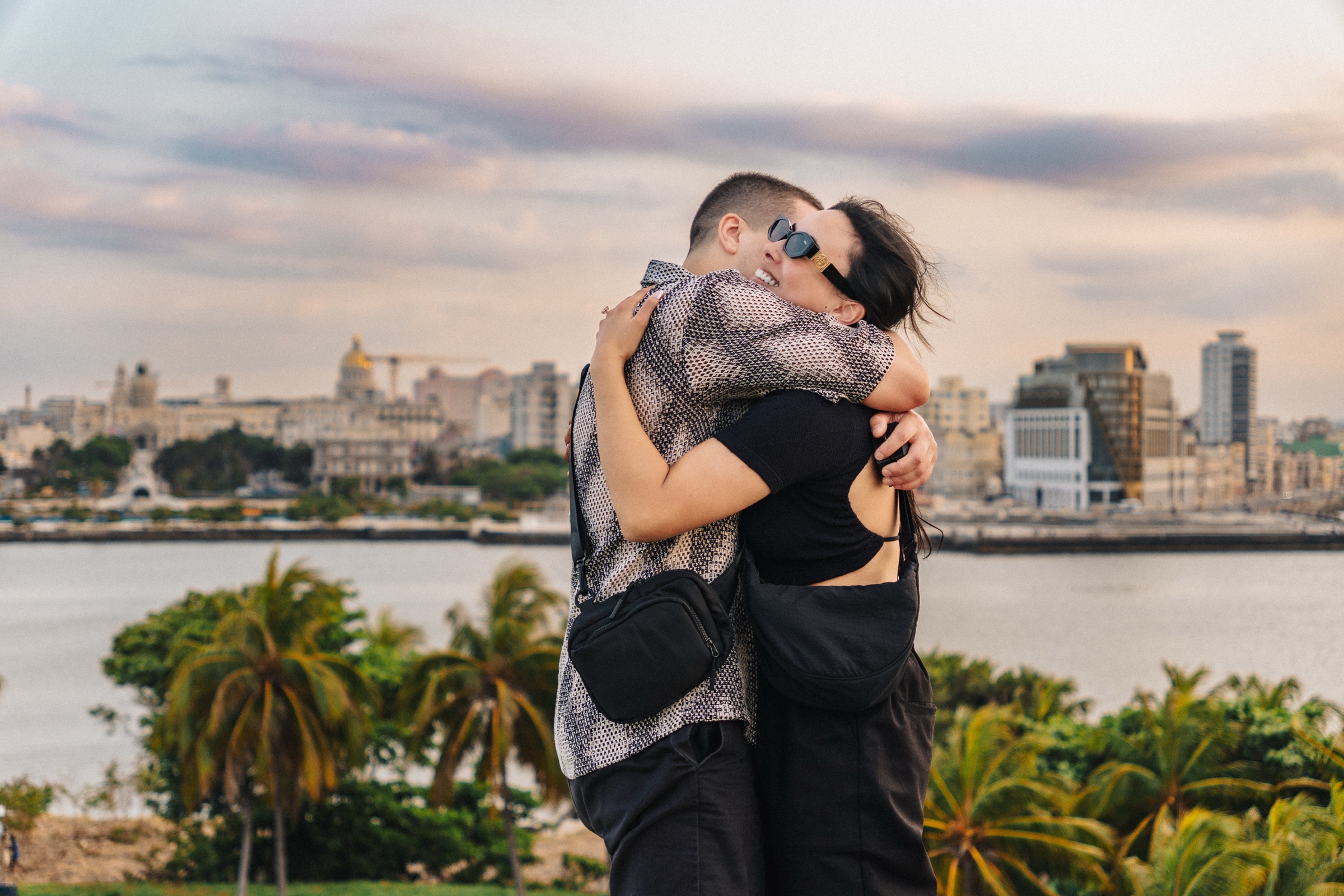
It starts weeks earlier, in an email thread she'll never see. It ends on a rooftop with champagne. In between: one question, on one knee, in the most photogenic city in the world.
Read on →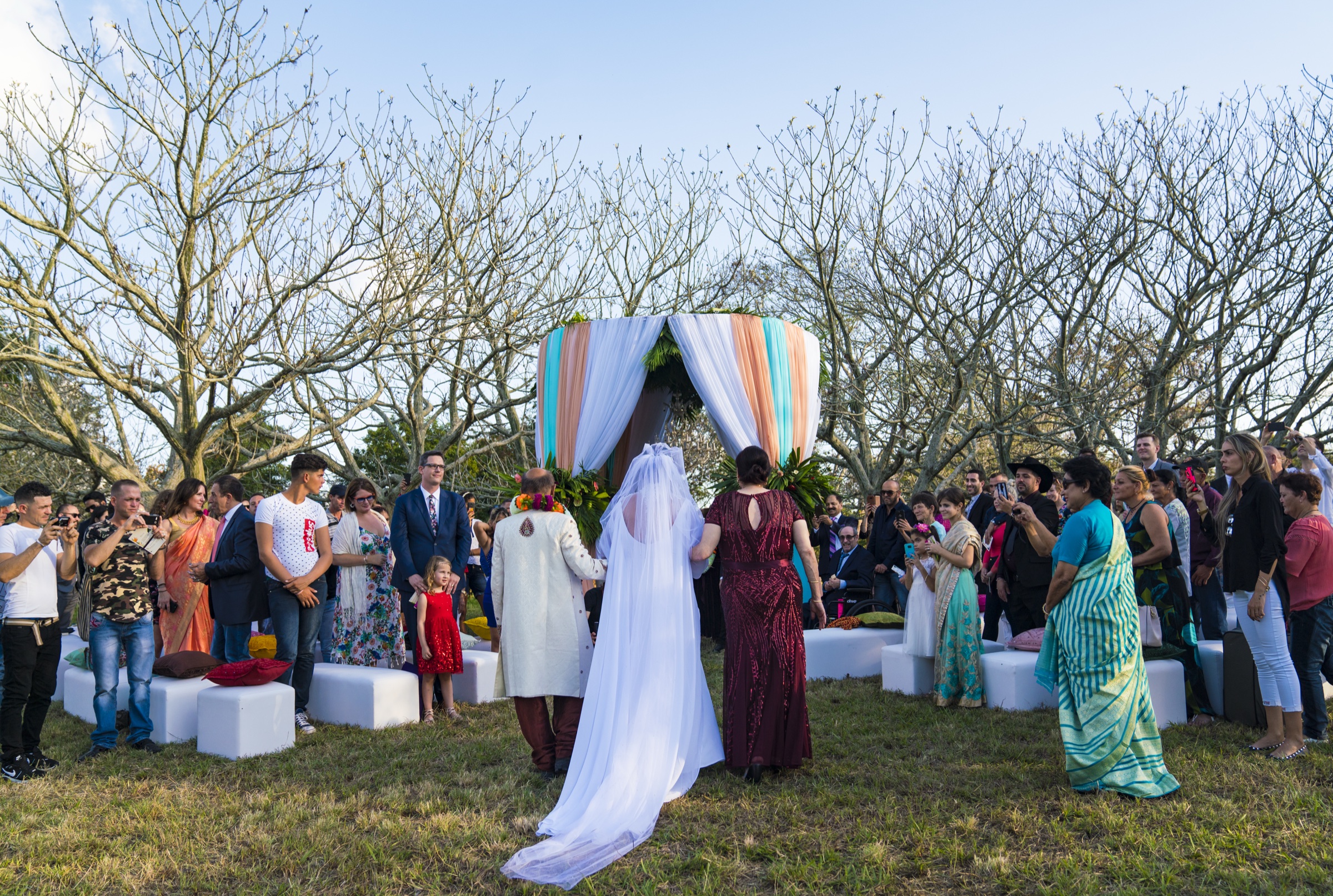
He grew up riding horses outside Havana. Her family came from India by way of New York. The wedding had garlands, a mandap strung between the trees, a sitar in a colonial courtyard — and a horse.
Read on →Reading is good. Walking is better. Book a session and let one of us walk you through the city.