
Field notes
She thinks it's just a photoshoot
It starts weeks earlier, in an email thread she'll never see. It ends on a rooftop with champagne. In between: one question, on one knee, in the most photogenic city in the world.
Read on →Two and a half hours west of Havana, the valley that time forgot.
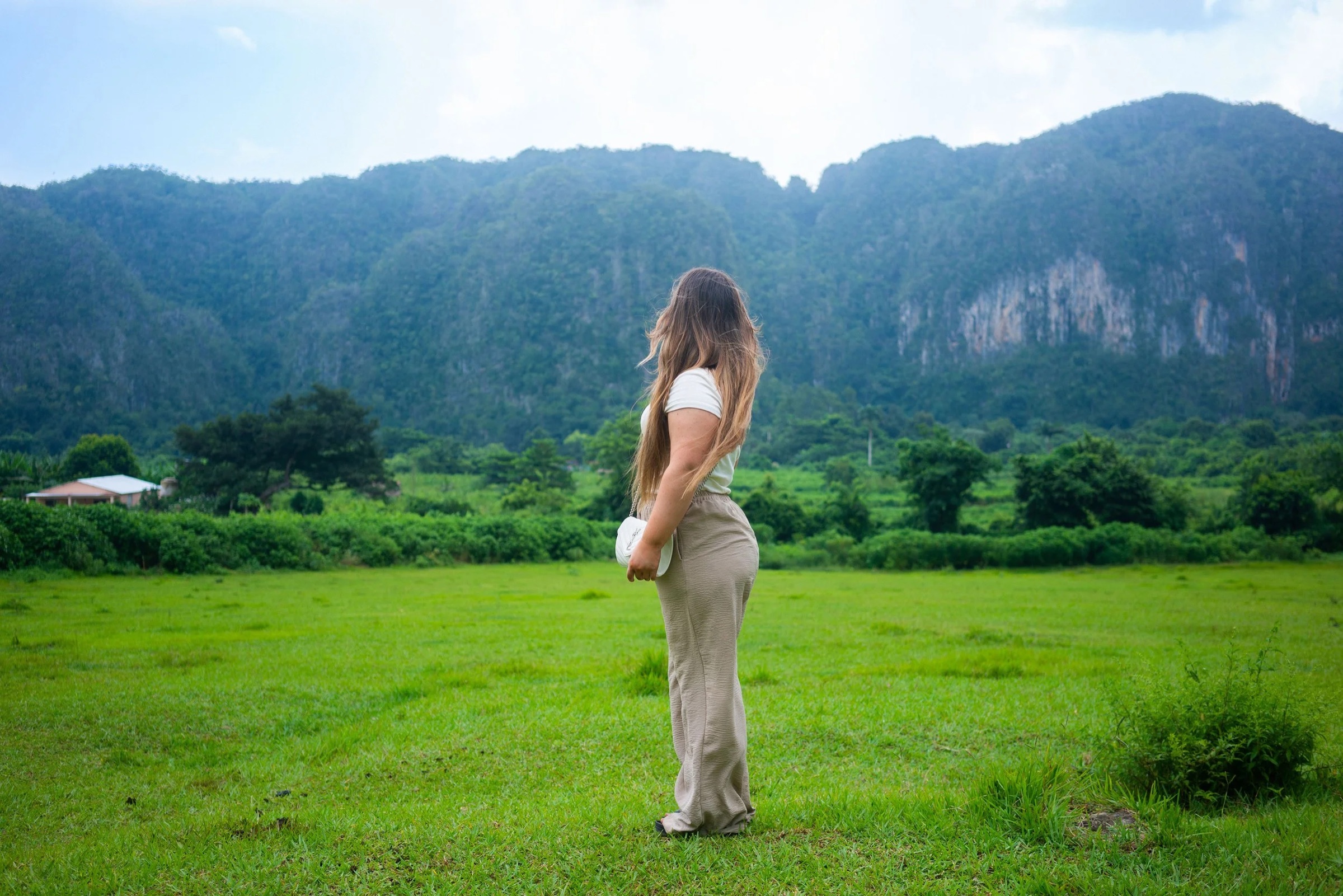
Jurassic mountains, red earth, thatched drying barns, and the tobacco every cigar maker on earth envies. A love letter to the valley we drive to before dawn.
We leave Havana in the dark. Two and a half hours west, somewhere past the town of Pinar del Río, the flatlands start to buckle — and then the mogotes appear: huge, round-shouldered limestone mountains standing alone in the fields like sleeping animals. The mist burns off, the earth turns red, and you are in Viñales, the most beautiful valley in Cuba and one of the most particular agricultural landscapes anywhere on earth.
The mogotes are the leftovers of an enormous cave system that formed more than a hundred million years ago and then collapsed, leaving only its hardest bones standing. The hills are still hollow — the Gran Caverna de Santo Tomás, Cuba's largest cave system, honeycombs the range for kilometres, and you can boat through the Cueva del Indio on an underground river. The name is younger and a little funny: the story goes that early Spanish settlers planted grape vines here — viñas. The vines failed almost immediately. The name stayed.
In 1999, UNESCO declared the valley a World Heritage Cultural Landscape — and the word that matters there is cultural. Viñales isn't protected for its looks. It's protected because of how it is farmed: by hand, by families, more or less the way it was farmed two centuries ago.
Cigar people speak of this corner of Cuba — Pinar del Río, and the Vuelta Abajo lands around it — the way wine people speak of Burgundy. The recipe can't be exported: iron-red soil that drains fast, mountains that trap the morning mist, hot days, cool nights, and four centuries of accumulated craft. Tobacco goes into the ground in late autumn and is harvested from January to March, leaf by leaf, by hand. Farmers still plough with oxen — not for the postcard, but because a tractor compacts the soil and the soil is the whole point.
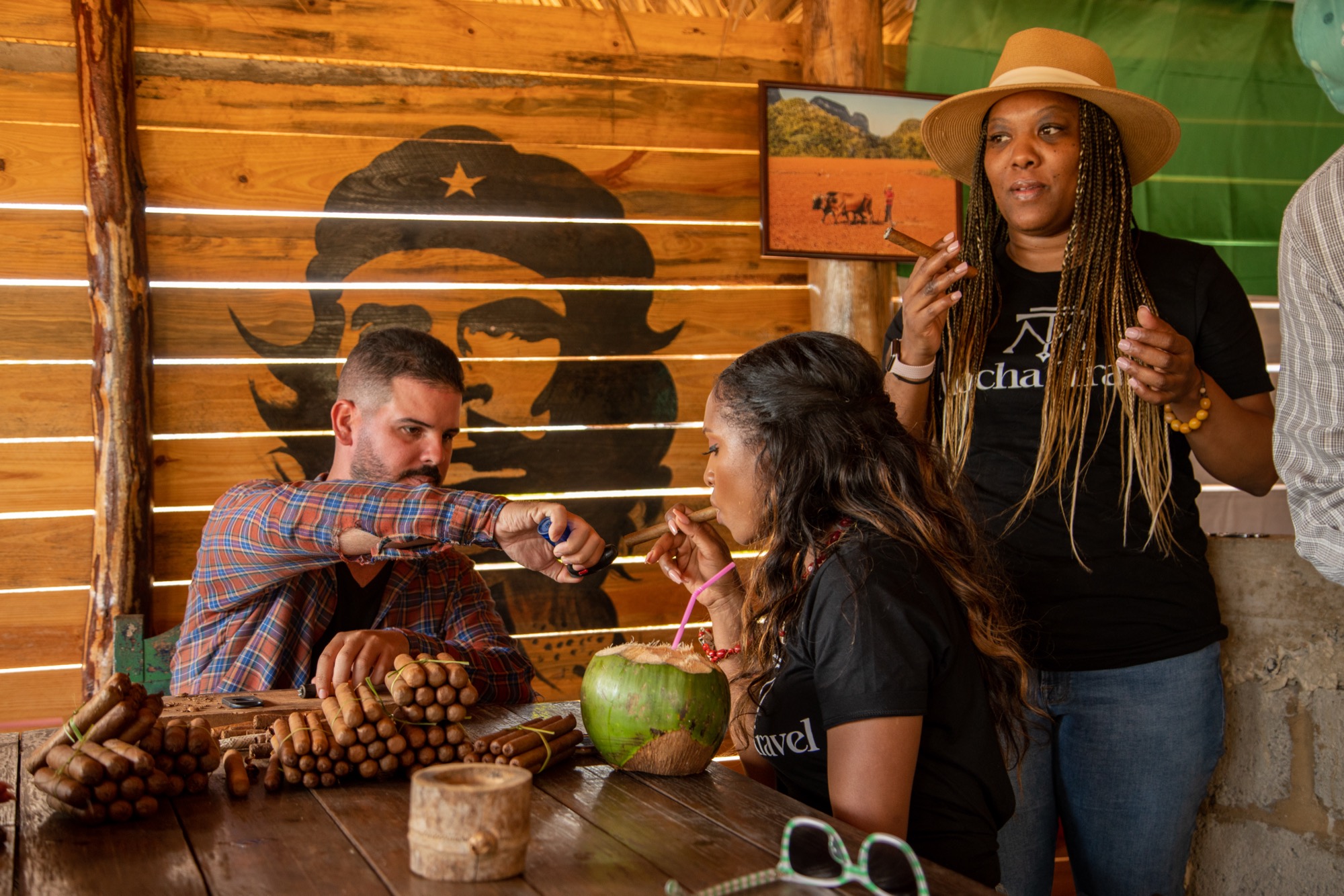
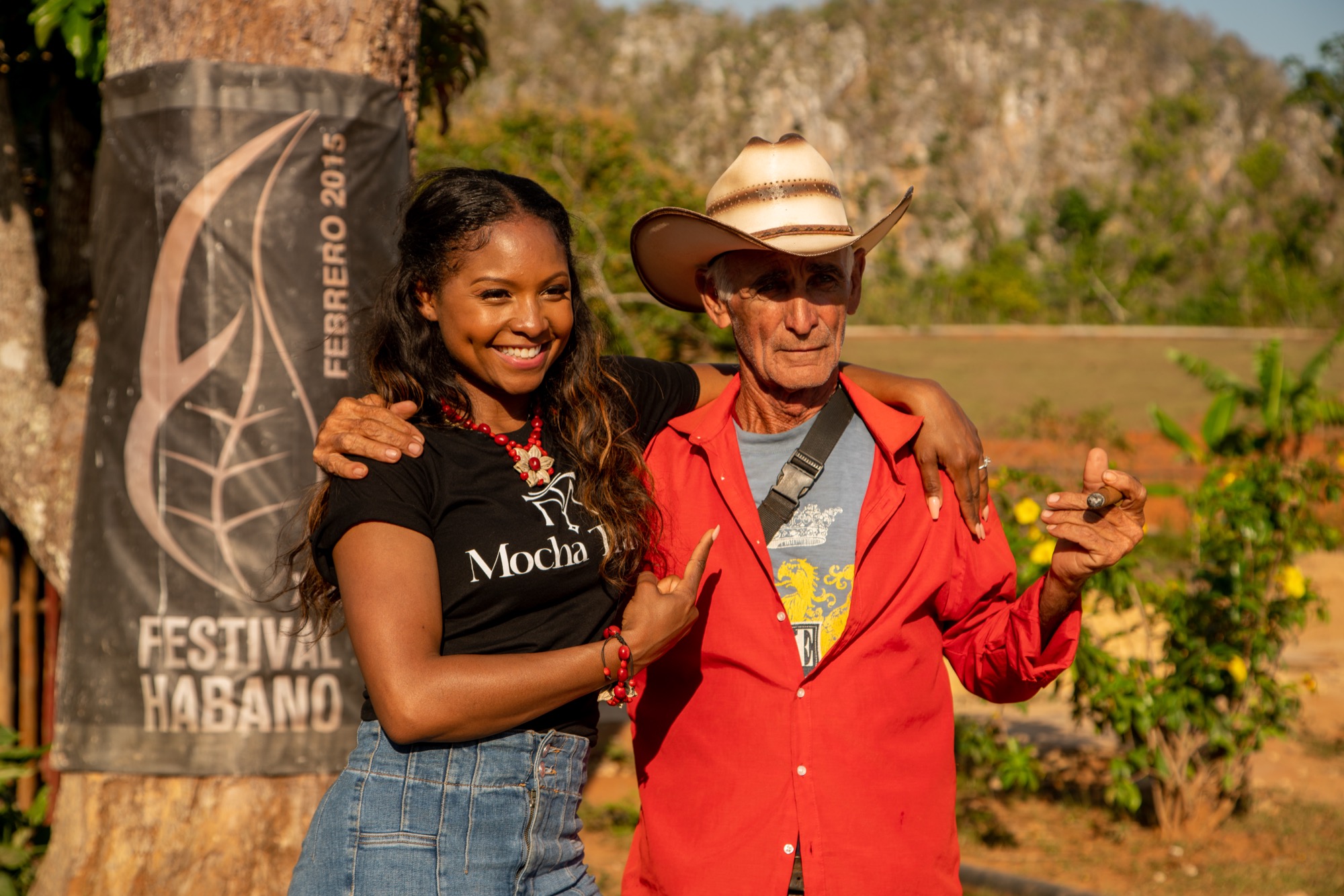
After the harvest, the leaves hang in the casas del tabaco — the thatched A-frame barns that dot the valley — air-curing for about fifty days, turning from green to gold to chestnut brown, before fermentation deepens them further. Then comes the arrangement that surprises every visitor: the farmers sell most of their crop to the state, where it becomes the famous names — and keep a small share for themselves. That share becomes the farm cigar: unbanded, unbranded, rolled at the same table where you're sitting.
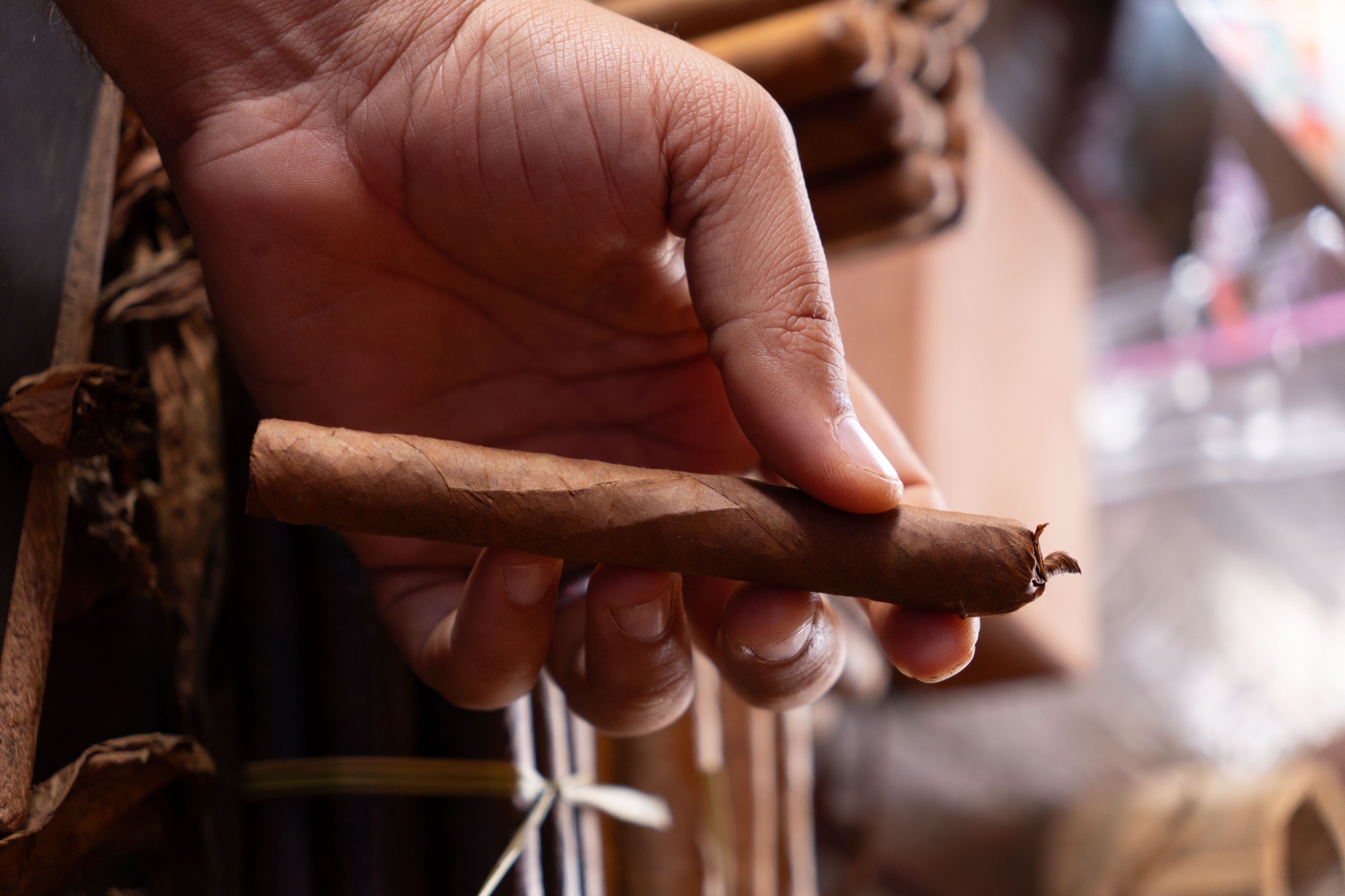
“The best tobacco in the world is not an accident. It is a valley, a family, and four hundred years of practice.”
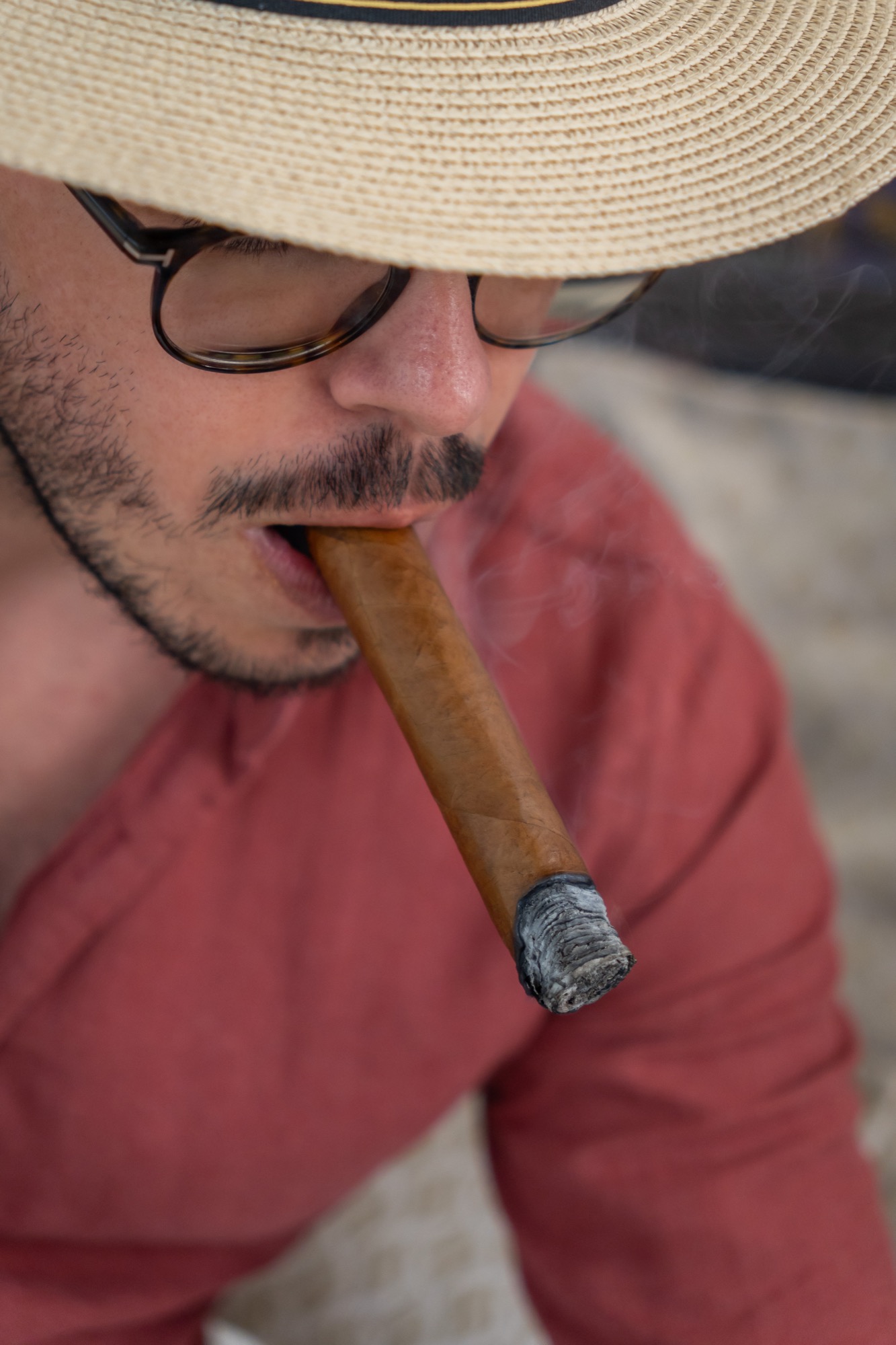
If you visit a farm — and you should — there is a ritual. The veguero rolls a cigar in front of you in about two minutes, moving the way people move when they have done something forty thousand times. The tip gets dipped in honey, an old guajiro habit that softens the first draw. You are told, firmly and kindly, not to inhale. And then you sit there, in a wooden barn that smells of curing leaves, smoking something that was a plant in that field a year ago — and the whole industry of humidors and cedar boxes suddenly feels very far away.
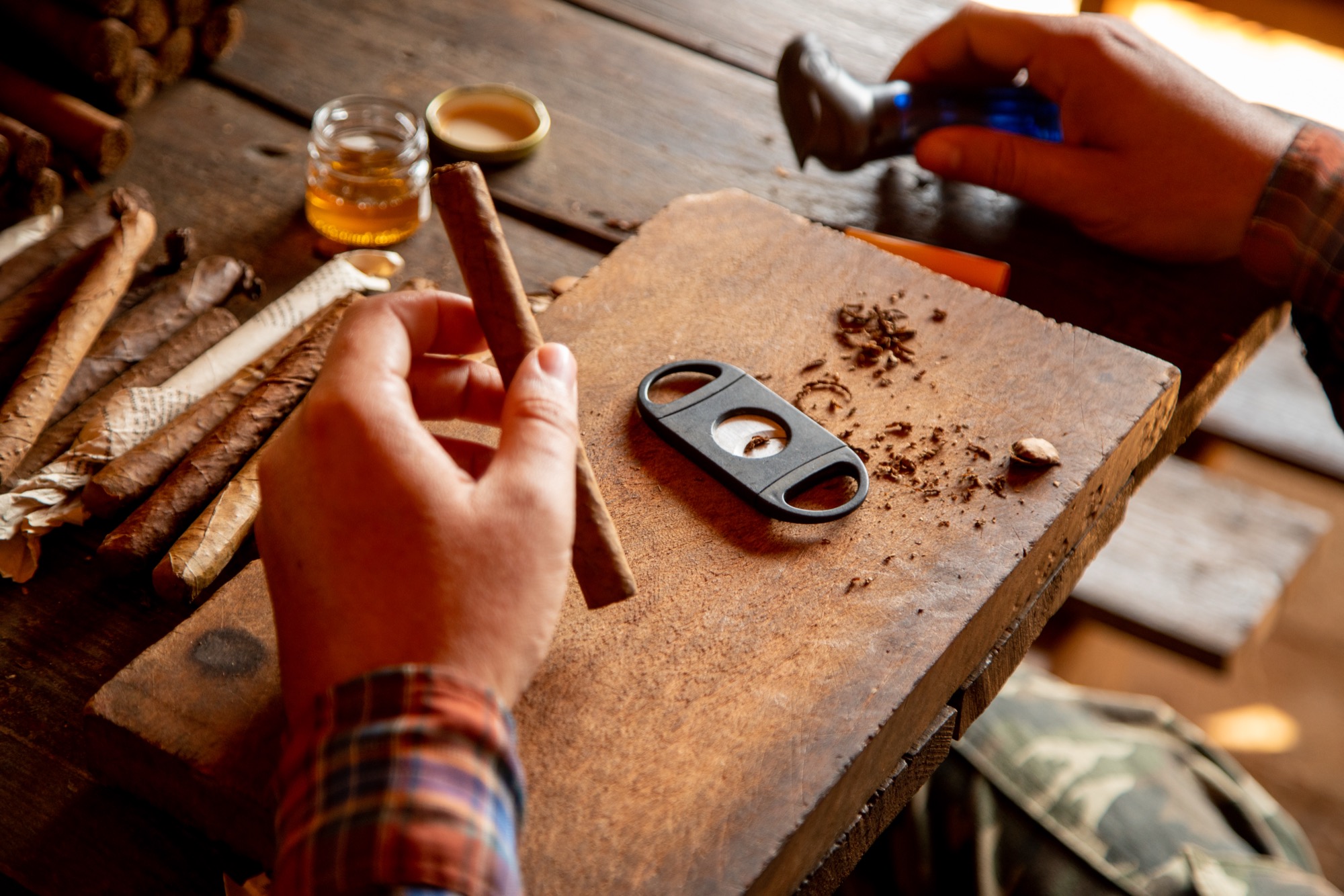
The town of Viñales is essentially one long street of single-storey houses, each with a porch, each porch with rocking chairs, and nearly every house renting a room — the valley runs on casas particulares, family guesthouses where breakfast is mango, eggs, and coffee grown a few hills away. Horses are transport here, not attractions. Evenings are dominoes on the porch and roosters that have never respected anyone's schedule. It is a hard-working place in a hard time, and it carries it the way the countryside does: quietly, generously, without drama.
Two curiosities to take home. On one cliff face you'll find the Mural de la Prehistoria — a 120-metre painting of evolution on bare rock, started in 1961 by a student of Diego Rivera. You will either love it or be baffled by it; there is no third option. And hiding in these hills grows the palma corcho, the cork palm — a living fossil that has survived, nearly unchanged, since the age of the dinosaurs. Botanists make pilgrimages. The palms, like everything else in Viñales, are unimpressed by the attention.
And the light — because we are photographers and cannot help ourselves. Dawn in Viñales, when the mist is still lying between the mogotes and the first sun hits the red fields, is the single best light we know in Cuba. It is why we always leave Havana in the dark.
Our Viñales Day Trip & Shoot leaves Havana before sunrise so you arrive with the mist. A morning of photographs among the mogotes, a real tobacco farm with a real veguero, and the drive home at golden hour.
See the Viñales day trip →It starts weeks earlier, in an email thread she'll never see. It ends on a rooftop with champagne. In between: one question, on one knee, in the most photogenic city in the world.
Read on →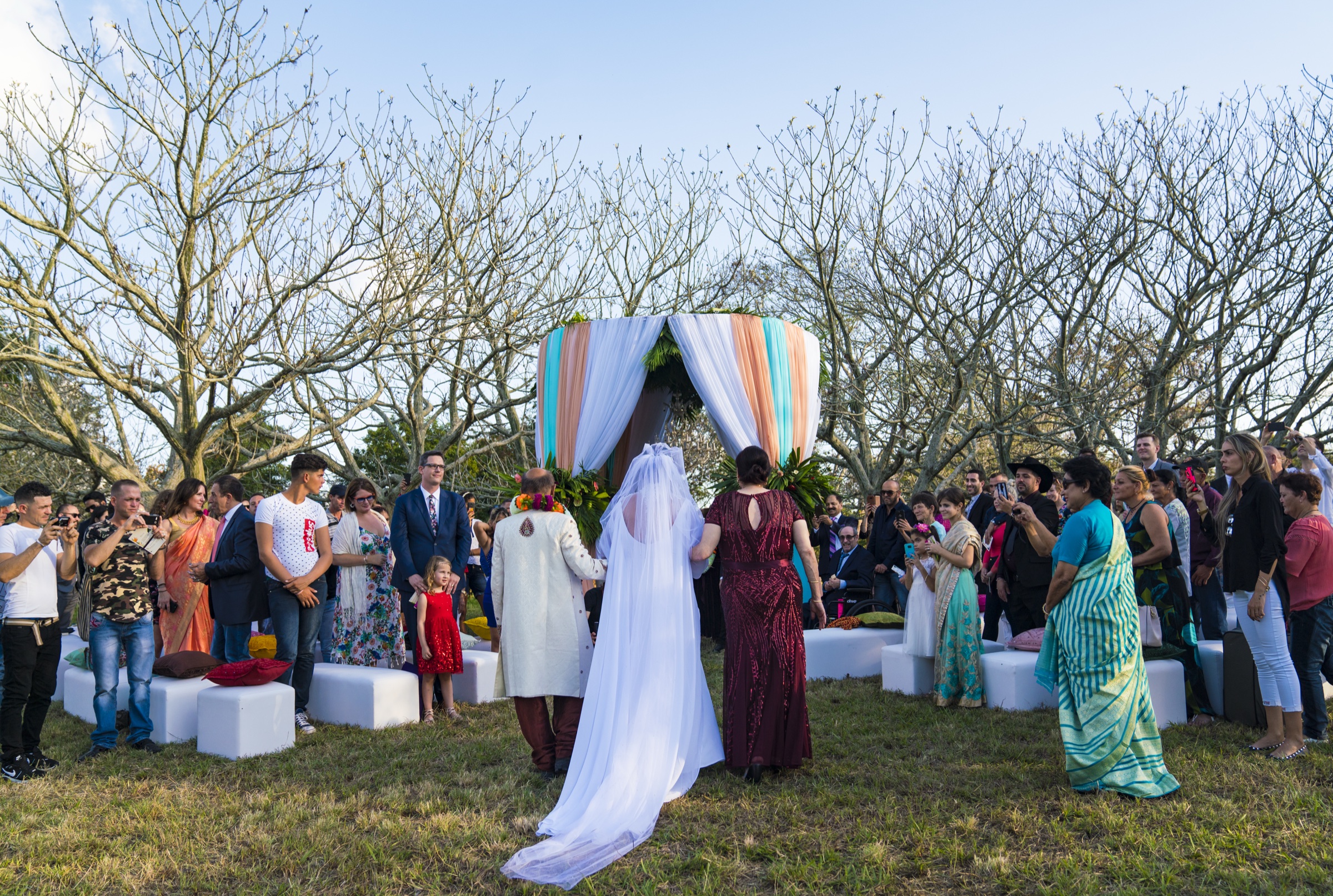
He grew up riding horses outside Havana. Her family came from India by way of New York. The wedding had garlands, a mandap strung between the trees, a sitar in a colonial courtyard — and a horse.
Read on →
An open letter to anyone coming to Cuba wanting to see what the guidebooks don't show — the hidden courtyards, the neighborhood markets, the five-o'clock light.
Read on →Reading is good. Walking is better. Book a session and let one of us walk you through the city.